
England confirms 45m³ equipment-housing cap for EV charging
England plans to allow multiple EV charging equipment enclosures within a combined 45m³ limit, but the new planning rights are not yet in force.
13 September 2026 · 4 min read
Contents
The government has confirmed plans to expand permitted-development rights for EV charging equipment in England, allowing multiple equipment enclosures within a combined 45 cubic metre limit in qualifying non-domestic off-street car parks.
The change could give charging operators and employers more flexibility over the supporting equipment needed alongside charging posts. But it is not permission to build under the new limit today: legislation must still amend the planning rules and bring the changes into force.
According to Planning Geek’s report, published on 12 September 2026, the Department for Transport confirmed the decision in its consultation response issued on 11 September. The proposed expansion concerns equipment housing, rather than an unrestricted right to develop a charging site.
What will change
The existing permitted-development right allows one equipment-housing unit at ground level within a non-domestic area lawfully used for off-street parking, subject to conditions. Its volume limit is currently 29m³.
The consultation proposed allowing more than one unit while keeping that same combined volume. The government has instead committed to allowing multiple units with a higher 45m³ cumulative cap.
That distinction matters when designing a site. The announced allowance is not 45m³ for each cabinet or enclosure: it is the combined maximum for the equipment housing covered by the revised right. The precise statutory wording defining how the limit applies has yet to be published.
The reform concerns Class E of Part 2 of Schedule 2 to the Town and Country Planning (General Permitted Development) (England) Order 2015. This is the provision for charging upstands and associated equipment, not the similarly named planning provisions for garden outbuildings or commercial uses.
Why equipment needs space
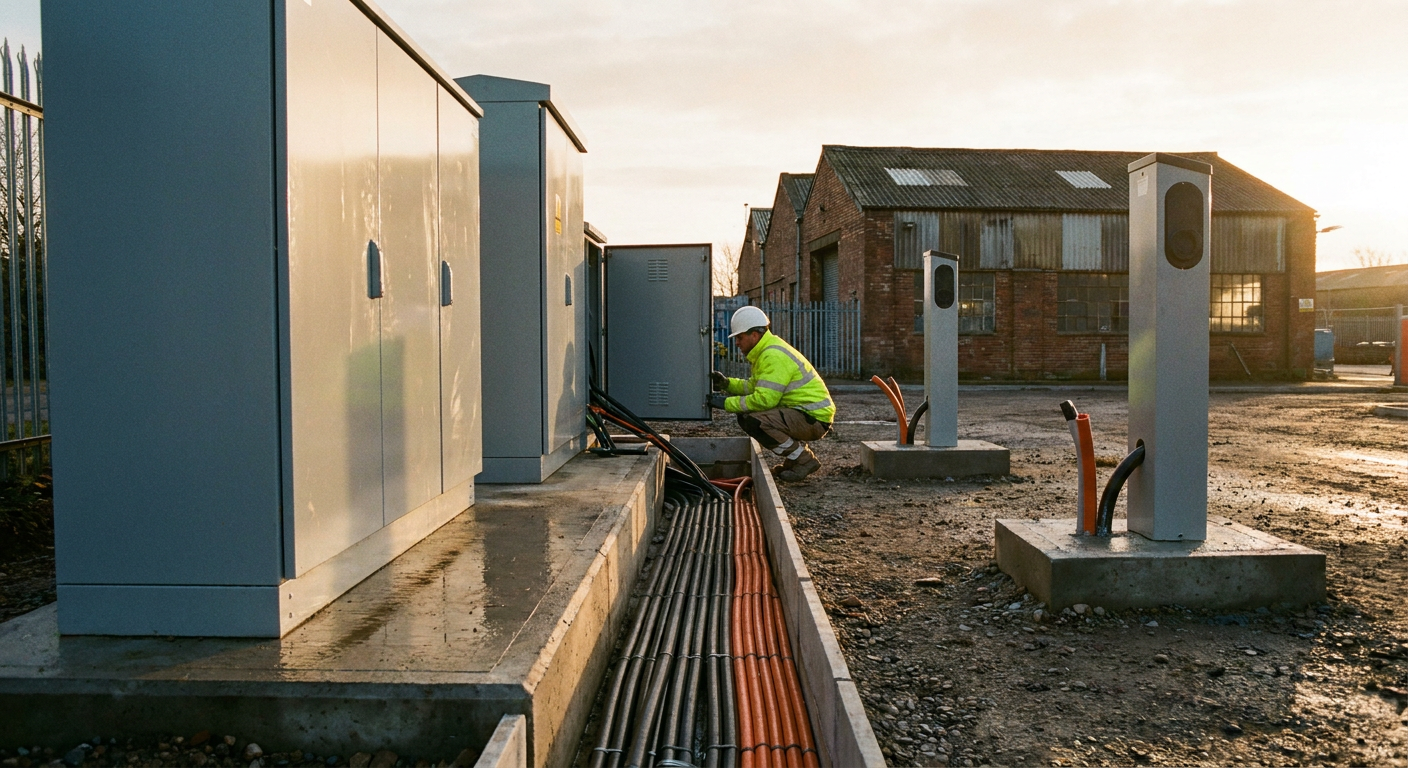
A charging installation involves more than the posts that drivers plug into. Higher-powered systems can need transformers, control equipment and battery systems housed in separate external enclosures.
As Planning Geek reports, the Department for Transport’s response recognises that the current single-unit arrangement does not accommodate all those requirements. Supporting equipment can consequently require a separate planning application even when the charging upstands themselves qualify as permitted development.
The decision to increase the volume follows consultation evidence about the equipment needed for modern, higher-capacity and ultra-rapid charging installations. Allowing separate enclosures within a larger combined allowance is intended to address that practical constraint.
It does not mean every installation will qualify. The government intends equipment housing to remain proportionate and ancillary to the charging infrastructure, with the eventual legislation setting the applicable limits and conditions.
Current limits still apply
For projects being assessed now, the existing rules remain the starting point. Planning Geek identifies several controls on equipment housing under the current Class E provisions:
- The single unit must not exceed 29m³ in volume or 3 metres in height from the parking surface.
- It must not be within 5 metres of a highway.
- It must not be within 10 metres of the curtilage of a dwellinghouse or block of flats.
- The right excludes equipment housing within a scheduled monument site or the curtilage of a listed building.
Existing conditions also require removal and reinstatement when the development is no longer needed for charging.
These are current-law requirements, not a confirmed list of conditions for the future right. The consultation response settles the direction of change on unit numbers and cumulative volume, but does not provide the complete statutory package.
The government says appropriate safeguards will apply, including prior approval where appropriate. The full procedure and matters it would cover have not been settled in the response. Suggestions raised by consultation respondents, such as relaxing the highway setback, should not be treated as agreed reforms.
What employers should do
For fleet and procurement teams, the practical step is to distinguish today’s deliverable scheme from options that depend on the forthcoming legislation. A design using several enclosures within 45m³ should not be described as currently permitted simply because the government has announced its intention.
Ask installers or planning advisers to identify which parts of a proposal qualify under existing rights, which require an application, and which depend on future changes. That assessment should cover the supporting plant as well as the charging posts.
For HR and people teams communicating workplace charging plans, the same distinction helps keep expectations realistic. An announced planning reform is not a confirmed installation date, and employers should avoid promising facilities on that basis alone.
No start date yet
The official consultation outcome page identifies autumn 2026 as the intended period for laying secondary legislation before Parliament, subject to parliamentary time and subsequent commencement, according to Planning Geek.
That is a legislative timetable, not an effective date. The relevant instrument must be made and its commencement provisions must take effect before operators can rely on the expanded right.
The changes concern England only. Employers with sites elsewhere in the UK should not assume the same provisions apply in Wales, Scotland or Northern Ireland.
The Charge Scheme view
What this means for you
From The Charge Scheme’s perspective, the useful change is greater flexibility for the equipment behind a charging installation, not blanket permission for a larger project. Employers should ask suppliers to separate proposals that comply with today’s rules from those relying on the future 45m³ allowance. Drivers should treat the announcement as a potential improvement to infrastructure delivery, rather than a promise of new charging facilities by a particular date.
Sources
- Government confirms new EV charging permitted development rights — Planning Geek, 2026-09-12
- Changes to various permitted development rights for EV charging: government response — Department for Transport, 2026-09-11
- Electric vehicle charging: changes to permitted development rights — GOV.UK
See what you could save on charging
Salary sacrifice takes 20-50% off the cost of EV charging, at home, at work and in public.


